

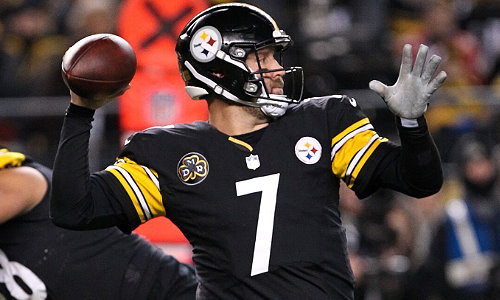
Felt Competitive with Big Ben
by Bo Marchionte
@bomarchionte | College2Pro.com
Published December 11, 2025, 1:29 PM
Pittsburgh, PA – The last time the Steelers stood on the sport’s biggest stage, it was February 6, 2011, under the glare of Super Bowl XLV in Arlington. And the quarterback who denied Pittsburgh its seventh Lombardi wasn’t a Steelers legend, it was Aaron Rodgers, firing lasers for the Green Bay Packers while collecting the only ring of his Hall of Fame career.
Rodgers was 27 years old, now the four-time league MVP is 42 and on cusp of calling his Hall of Fame career a wrap.
That night in AT&T Stadium marked more than a loss. It quietly opened a drought no one in Pittsburgh believed would stretch this long. A franchise built on parades and permanence, a city that treats Lombardi Trophies like birthrights, has spent more than a decade watching in February instead of playing in the Super Bowl.
Hell, we could mention conference title games or something beyond the wildcard rounds of the NFL playoffs might satisfy some of the fans, who have grown more uncomfortable with the current situation.
So how does this year’s Steelers team compare to the one that fell short against Green Bay?
The 2010 Steelers were a machine structured, hardened, and balanced. That team spoke true to the identity of how the Steelers want to characterize themselves.
Running the football and stellar defense.
They finished the regular season 12–4, controlled games with a defense that allowed just 14.5 points per game and gave almost nothing on the ground. The current defense is allowing 23.9 points per game, ranking 19th in the league.
The run game ranked 11th in the league with 1,924 yards (120.3) per game. Pittsburgh ranks 29th in yards per game (89.2) in the National Football League.
The emblem on the side of right side of the Steelers helmet is about the only recognizable thing between the Steelers then and the team now.
The 2010 team smothered opponents squeezed mistakes out of quarterbacks and dictated tempo from the opening snap. With Troy Polamalu roaming, James Harrison and LaMarr Woodley packaging nightmares off the edge, and a secondary that punished every inch of indecision, that defense didn’t just set the tone it was the tone.
And on offense, they complemented that ferocity with efficiency. Ben Roethlisberger threw for over 3,000 yards without needing to carry the entire operation. Rashard Mendenhall churned out 1,200 rushing yards, and arguably one of the most unique receivers in Hines Ward.
Sunday felt scripted, like Pittsburgh already knew how the movie ended.
Today’s Steelers don’t feel like that yet, anyway.
Their record hovers in the seven-win range instead of the dominant 12–4 of old. They score around 24 (23.7) points per game, almost identical to 2010’s offense, but they also give up about the same amount. Their point differential is essentially a wash far from the +143 cushion the 2010 team built over the season.
This defense has stars, no doubt T.J. Watt is elite but it doesn’t strangle teams the way the 2010 unit did. Back then, opponents expected long afternoons. Now, teams see opportunity. Pittsburgh no longer closes every door; instead, they trade punches, hoping their offense can match the moment.
Back then, Pittsburgh rolled into the Super Bowl with a top-five defense, a roster loaded with stars like Troy Polamalu, James Harrison, LaMarr Woodley, Ryan Clark, Ike Taylor.
And that’s another difference.
The 2025 offense leans heavily on the arm and experience of ironically Rodgers, the same quarterback who broke their hearts in 2011. His numbers are steady, his leadership real, but this group hasn’t yet found the automatic chemistry that Roethlisberger’s offense discovered when it mattered most.
If anything defines the contrast between eras, it’s identity.
The 2010 Steelers knew exactly who they were. The 2025 Steelers are still discovering it.
But Pittsburgh fans don’t wait quietly.
Not here.
Not ever.
This is a city that craves Super Bowls, demands dominance, and judges every season by whether another Lombardi is added to the shelf. That’s why comparisons feel heavier now.
That’s why the drought feels louder than ever before. The mirage in the desert, they’re walking and walking but not drinking the water.
If the 2010 team was a finished blueprint, this one is still sketching the outlines. And the only question left is whether they can ink the ending that’s eluded Pittsburgh since the night Aaron Rodgers stole th spotlight in Texas.
The Steelers we’re that good in 2010 and ended up losing 31-25 to the Packers.
In hindsight, that 2010 Steelers roster feels like the franchise’s swan song. The last roar of a dynasty-era organism before it slipped into a world where Super Bowls became memories instead of expectations.
That team was the final bridge between Pittsburgh’s championship identity and the long, grinding stretch of mediocrity that followed. You can trace the shift right back to that night in Arlington.
A once-automatic contender beginning its slow descent into inconsistency, close calls, and seasons defined more by survival than supremacy. It was the moment the Steelers stopped being the team everyone feared in January and quietly relying on the past to remain relevant.
Photo Credit Frank Hyatt/College2Pro.com
