

by Bo Marchionte
@bomarchionte | College2Pro.com
Published October 7, 2026, 3:52 PM
There Are Still Somethings the Camera Cannot Capture
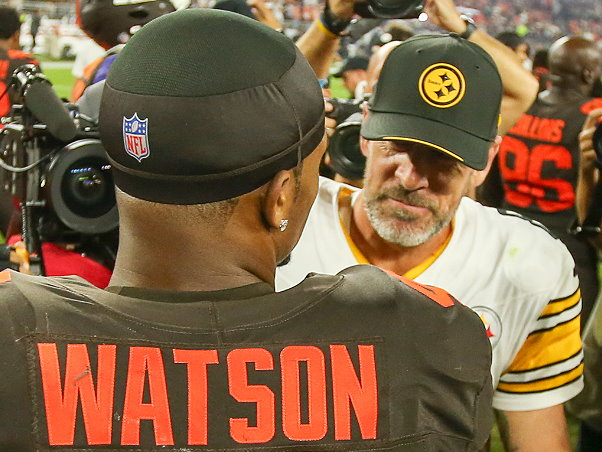
There is a beautifully choreographed fraud that unfolds at midfield after every NFL game.
The clock expires.
Helmets come off.
Quarterbacks embrace.
Former college teammates reunite. Jerseys change ownership. Men who spent three hours attempting to shorten each other’s careers suddenly behave like gentlemen at a charity golf outing.
Television eats it up.
The NFL has perfected the art of making violence look civilized once the whistle blows.
But there’s a catch.
Somebody lost.
And once the cameras disappear, sportsmanship has an expiration date.
The walk from midfield to the locker room is where the NFL sheds its makeup. No more obligatory handshakes. No more smiling for an old Wisconsin teammate. No more pretending that getting your ass kicked was simply an enjoyable afternoon among friends.
Behind those doors, defeat becomes considerably less photogenic.
I’ve walked into enough losing locker rooms to recognize the temperature before any player says a single word.
Silence can be downright hostile.
Not because players are necessarily angry with reporters. They’re angry with themselves, the scoreboard, a missed assignment or the maddening realization that seven days of preparation just went down the toilet.
And here comes some idiot holding a microphone.
Nick Herbig understands the contradiction.
“We all know that it’s a physical, crazy sport, and you put so much time, energy, blood, sweat and tears into this game,” Herbig said.
That investment creates a peculiar fraternity.
The opponent trying to bury you beneath his shoulder pads is also among the few people qualified to understand what the afternoon demanded.
“The only people that know that is the ones out there doing it with you,” Herbig said. “You kind of have that respect for each other. Kind of like fighting or going to war, whatever.”
So, they shake hands.
“When we get back into the locker room, it’s like, okay, now you got time to reflect on what we did good, what we could do better,” Herbig said.
Asked whether some losses left him wanting absolutely nothing to do with anybody, Herbig didn’t bother dressing up the answer.
“For sure. There’s a couple of those for sure.”
That’s the version of professional football the networks don’t sell between insurance commercials.
Mason Rudolph offered something even more revealing.
“I think it may appear jovial on the field postgame, even if you lose, because you’re just trying to be a good sport with people that you know,” Rudolph said. “Old friends or coaches that you can’t blow them off.”
The Battles Create Eternal Bonds
There’s an exquisite absurdity to that obligation.
Your afternoon has been professionally demolished. Your livelihood is evaluated by people who believe they could have made that third-down throw. Tomorrow, strangers will dissect your failures over breakfast.
But first, a little socializing.
“You want to say hello,” Rudolph said. “You don’t want to obviously talk too long after a loss.”
Precisely.
Congratulations. Wonderful seeing you. Now kindly disappear.
Rudolph also pointed out that winning requires its own emotional censorship. NFL coaches might experience two seconds of genuine euphoria before remembering they’re expected to act like statesmen.
The winners suppress the celebration.
The losers suppress the frustration.
Midfield becomes a diplomatic summit between two groups experiencing entirely different psychological weather.
Then the doors close.
And the media enter that second room, navigating bruised egos, bruised bodies and the delicate business of asking intelligent questions when nobody particularly wants to provide intelligent answers.
There is no television-friendly handshake waiting inside.
Just men confronting failure while strangers document the wreckage.
And somewhere in that uncomfortable silence, somebody raises a microphone.
Hey, got a minute?
Photo Credit Frank Hyatt/College2Pro.com
