

by Bo Marchionte
@bomarchionte | College2Pro.com
Published July 27, 2026, 1:49 PM
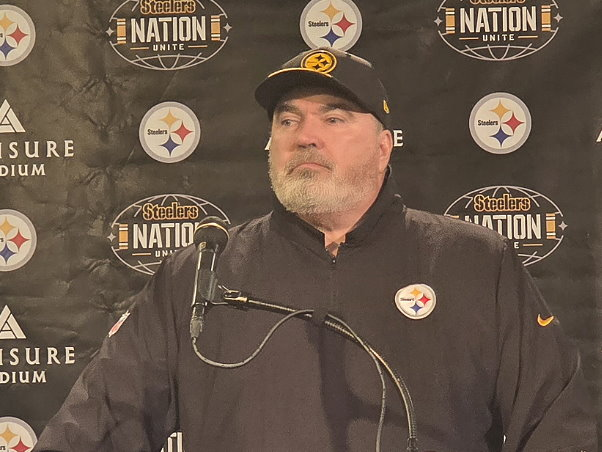
McCarthy Turns Down the Volume
A week ago, Mike McCarthy sounded like a man ready to take a red pen to his own playbook.
Sunday, the Steelers finally got to see what survived the edit.
Pittsburgh’s 30-27 win over Cincinnati wasn’t some offensive Sistine Chapel. Aaron Rodgers missed Roman Wilson on one throw, sailed another over Pat Freiermuth and couldn’t connect with DK Metcalf after escaping the pocket.
There were still smudges.
But for the first time this season, the Steelers offense looked less like a collection of ideas and more like an actual plan.
And maybe that’s because there were fewer ideas competing for reps.
After Pittsburgh’s 20-3 loss at New England, McCarthy admitted exactly that.
“If it’s not clean, you cut the volume down,” McCarthy said. “And we’re not clean on offense, so the volume’s getting cut down.”
Seven days later, Pittsburgh turned down the volume and turned up the production.
The Steelers scored 14 points in the first quarter for the first time since Week 6 of 2019. Their opening possession featured zero rushing attempts and ended with Rodgers finding Wilson for a touchdown.
More importantly, Pittsburgh finally found some answers on third down an area McCarthy said received considerably more attention during the week.
“Anytime you put more time and energy and the execution improves, it’s good for the players and coaches,” McCarthy said. “I think it really started with our third-down production.”
That’s the interesting part of McCarthy’s offensive haircut.
Cutting volume doesn’t necessarily mean shrinking the offense into three runs and four passes. It means trimming the menu while getting better at ordering from it.
Fewer personnel packages. More repetitions of the concepts Pittsburgh actually wants to run. More answers built inside those concepts. Less time asking 11 players to remember everything and more time allowing them to play the things they know.
McCarthy described it as “more emphasis and more…volume in these specifics.”
“Maybe not as many personnel groups,” he said.
That distinction matters.
An NFL offense can be thick without being diverse. Pittsburgh had spent two weeks carrying around a fat playbook without consistently playing fast, particularly when protection, personnel and communication began colliding.
Against Cincinnati, the Steelers condensed the information without necessarily becoming predictable.
Think of it as shrinking the language, not the conversation.
Right guard Brock Hoffman might have explained the benefit better than anyone.
“Mike had said earlier in the week, and we cut down some of the volume,” Hoffman said. “We’re going to get return on investment on the reps that we were going to get throughout the week.”
Return on investment.
There’s your offensive philosophy in three words.
Every practice rep has currency. If Pittsburgh spends Tuesday through Friday rehearsing 100 different possibilities and arrives Sunday proficient at none of them, that’s bad business.
McCarthy wanted fewer investments and a better return.
It was especially important up front, where Hoffman and rookie first-round pick Max Iheanachor formed a newly designed right side of the offensive line.
McCarthy said Pittsburgh found some things early that worked, then reached into what he called its “back burner” runs as the game developed. That wasn’t merely play-calling. It was the offensive line and coaching staff communicating well enough during the game to recognize what Cincinnati was giving them and adjust.
That’s scheme becoming football.
Instead of constantly reaching for another formation, another personnel grouping or another branch of the playbook, Pittsburgh began squeezing more from what it had already established.
There is an old temptation with offensive football to confuse more with better.
More formations.
More personnel.
More window dressing.
More answers.
But an offense only owns what it can execute when the stadium gets loud, the play clock hits eight and somebody across the line of scrimmage is trying to cave in your quarterback.
Pittsburgh learned that lesson painfully in New England.
McCarthy cut the volume.
Hoffman called it an investment.
And against Cincinnati, for one Sunday anyway, the Steelers realized less or more.
Steelers Statistical Leaders Against Bengals
- Passing: Aaron Rodgers, 292 yards, 3 touchdowns, 1 interception
- Rushing: Jaylen Warren, 127 yards (176 total yards)
- Receiving: Darnell Washington, 3 catches for 67 yards
- Tackles: Patrick Queen, 13 total
- Sacks: Derrick Harmon, 1 sack
.
Photo Credit Frank Hyatt/College2Pro.com
